'%3E%3Cmask id='b' fill='%23fff'%3E%3Cuse xlink:href='%23a'/%3E%3C/mask%3E%3Cuse fill='%23414141' xlink:href='%23a'/%3E%3Cg mask='url(%23b)' fill='%23414141'%3E%3Cpath d='M-160-170h300v300h-300z'/%3E%3C/g%3E%3C/g%3E%3C/g%3E%3C/svg%3E)
Aquatic Plant ID
They go by different names. You may call them “weeds,” “grass” or “moss.” Aquatic plants are an integral part of the Tennessee River’s ecosystem, whether providing nutrients for the species at the bottom of the food chain, cover and ambush areas for largemouth bass or food source for the multitude of local waterfowl.
This guide provides information to help you understand when these plants are most productive, where they grow and—most importantly—help you identify them. Whether you are an angler, property owner or any other lake user, we invite you to learn more about the aquatic plants present in our Tennessee Valley region reservoirs.
The guide also offers season-by-season tips for fishing among these plants.
Floating and Floating Leaf Plants

Parrot Feather
Non-native parrot feather (Myriophyllum aquaticum), a non-native plant grows well in calm, cool water. Introduced through the aquarium trade, this plant can be found in at least 26 states throughout the United States.
Pickerelweed
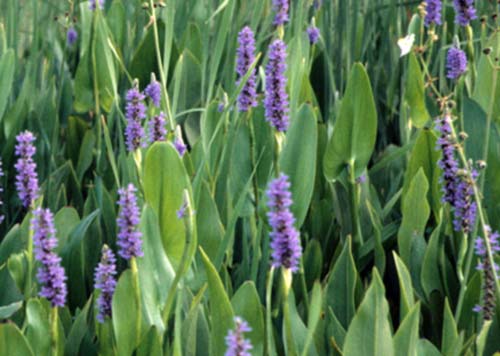
As native pickerelweed (Pontederia cordata) drops seed and begins to decay in fall, areas of water will start to open up around the thick stands left over from summer.
Sago Pondweed
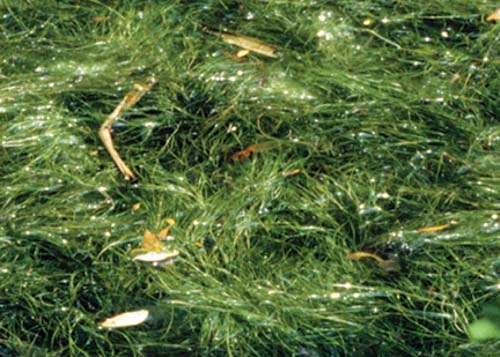
Native sago pondweed (Potamogeton pectinatus) is among the first grass to appear in the spring. Waterfowl rely on it for food, consuming the whole plant.
Salvinia, Common
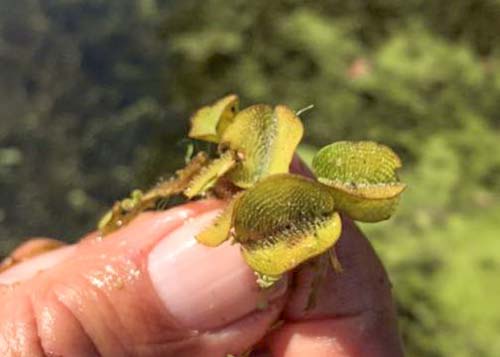
Common salvinia (Salvinia minima), a non-native species, rarely overwinters in the TVA system. It grows rapidly in warm weather, forming dense colonies.
Salvinia, Giant
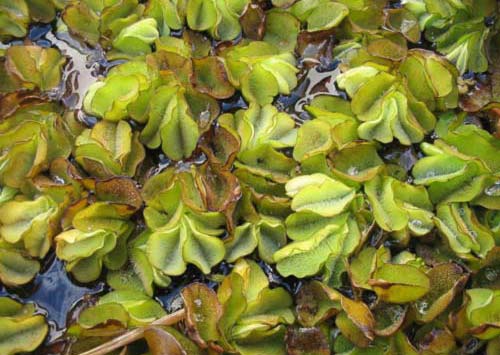
Salvinia, Giant (Salvinia molesta), is a non-native plant. In late spring, it can form floating mats. Giant salvinia thrives in calm, backwater areas.
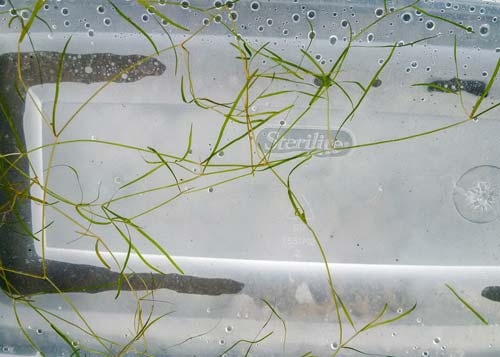
Slender Pondweed
Slender pondweed (Potamogeton pusillus), a native plant, will begin dying back early in fall, opening up space between other plants.
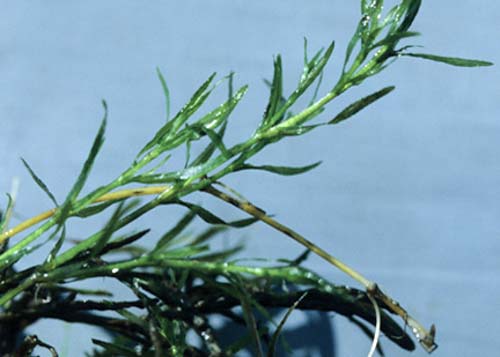
Southern Naiad
Native southern naiad (Najas guadalupensis) will increase growth and begin to top out during summer. Reaching the surface, the plant will begin to flower and continue to bloom through fall.
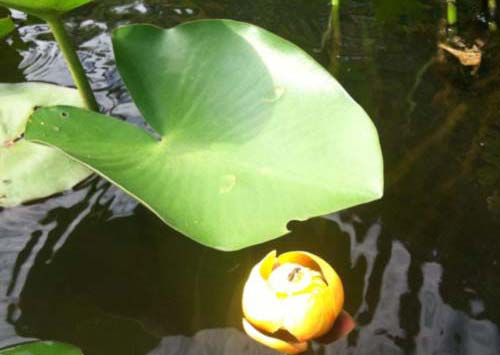
Spatterdock
The submersed portions of spatterdock (Nuphar advena – formerly N. lutea), a native plant, provide refuge for baitfish and juvenile bass. The stems of spatterdock make excellent spots for predatory species like bass.
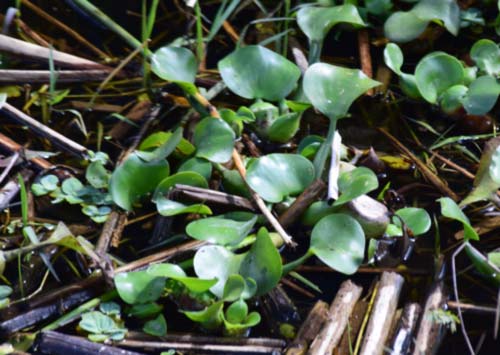
Water Hyacinth
Water Hyacinth (Eichhornia crassipes), a non-native plant, will rapidly grow and expand, producing new plants that will result in large floating colonies.
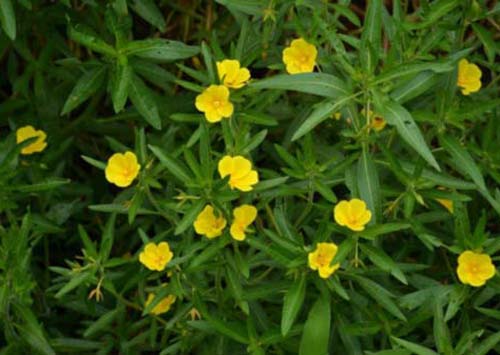
Water Primrose
While most species of water primrose (Ludwigia sp.) are native to the region, Ludwigia hexapetala, Uruguayan water primrose, is non-native. Once water primrose reaches the surface, it will rapidly spread out across the water's surface, forming interwoven, impenetrable mats.

Water Stargrass
Water Stargrass (Heteranthera dubia) Bright yellow star blooms just over the water surface make water stargrass easy to identify.

Watermeal
Watermeal (Wolffia columbiana), is a native species. Individual plants are barely visible to the human eye, but colonies can cover the water’s surface.
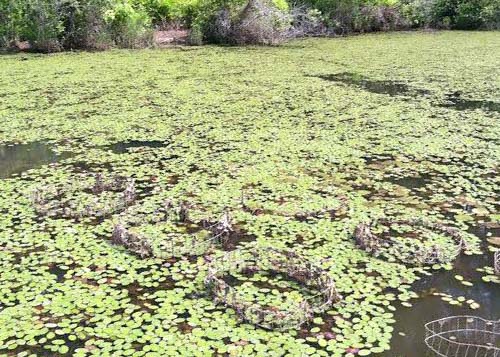
Watershield
Watershield (Brasenia schreberi), a native plant, beings to grow from an existing root system in late spring, sending up slime-covered leaves that eventually reach the water’s surface.
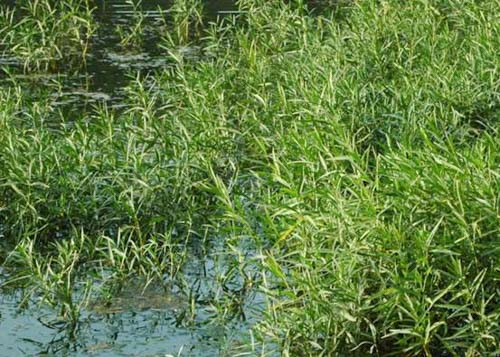
Water-Willow
Native water-willow (Justicia americana) flowers in early summer through fall. It creates shoreline habitat for invertebrates and attracts various fish species.
Shoreline Plants
Parrot Feather
Non-native parrot feather (Myriophyllum aquaticum), a non-native plant grows well in calm, cool water. Introduced through the aquarium trade, this plant can be found in at least 26 states throughout the United States.
Pickerelweed
As native pickerelweed (Pontederia cordata) drops seed and begins to decay in fall, areas of water will start to open up around the thick stands left over from summer.
Sago Pondweed
Native sago pondweed (Potamogeton pectinatus) is among the first grass to appear in the spring. Waterfowl rely on it for food, consuming the whole plant.
Salvinia, Common
Common salvinia (Salvinia minima), a non-native species, rarely overwinters in the TVA system. It grows rapidly in warm weather, forming dense colonies.
Salvinia, Giant
Salvinia, Giant (Salvinia molesta), is a non-native plant. In late spring, it can form floating mats. Giant salvinia thrives in calm, backwater areas.
Slender Pondweed
Slender pondweed (Potamogeton pusillus), a native plant, will begin dying back early in fall, opening up space between other plants.
Southern Naiad
Native southern naiad (Najas guadalupensis) will increase growth and begin to top out during summer. Reaching the surface, the plant will begin to flower and continue to bloom through fall.
Spatterdock
The submersed portions of spatterdock (Nuphar advena – formerly N. lutea), a native plant, provide refuge for baitfish and juvenile bass. The stems of spatterdock make excellent spots for predatory species like bass.
Water Hyacinth
Water Hyacinth (Eichhornia crassipes), a non-native plant, will rapidly grow and expand, producing new plants that will result in large floating colonies.
Water Primrose
While most species of water primrose (Ludwigia sp.) are native to the region, Ludwigia hexapetala, Uruguayan water primrose, is non-native. Once water primrose reaches the surface, it will rapidly spread out across the water's surface, forming interwoven, impenetrable mats.
Water Stargrass
Water Stargrass (Heteranthera dubia) Bright yellow star blooms just over the water surface make water stargrass easy to identify.
Watermeal
Watermeal (Wolffia columbiana), is a native species. Individual plants are barely visible to the human eye, but colonies can cover the water’s surface.
Watershield
Watershield (Brasenia schreberi), a native plant, beings to grow from an existing root system in late spring, sending up slime-covered leaves that eventually reach the water’s surface.
Water-Willow
Native water-willow (Justicia americana) flowers in early summer through fall. It creates shoreline habitat for invertebrates and attracts various fish species.
Submersed Plants
Parrot Feather
Non-native parrot feather (Myriophyllum aquaticum), a non-native plant grows well in calm, cool water. Introduced through the aquarium trade, this plant can be found in at least 26 states throughout the United States.
Pickerelweed
As native pickerelweed (Pontederia cordata) drops seed and begins to decay in fall, areas of water will start to open up around the thick stands left over from summer.
Sago Pondweed
Native sago pondweed (Potamogeton pectinatus) is among the first grass to appear in the spring. Waterfowl rely on it for food, consuming the whole plant.
Salvinia, Common
Common salvinia (Salvinia minima), a non-native species, rarely overwinters in the TVA system. It grows rapidly in warm weather, forming dense colonies.
Salvinia, Giant
Salvinia, Giant (Salvinia molesta), is a non-native plant. In late spring, it can form floating mats. Giant salvinia thrives in calm, backwater areas.
Slender Pondweed
Slender pondweed (Potamogeton pusillus), a native plant, will begin dying back early in fall, opening up space between other plants.
Southern Naiad
Native southern naiad (Najas guadalupensis) will increase growth and begin to top out during summer. Reaching the surface, the plant will begin to flower and continue to bloom through fall.
Spatterdock
The submersed portions of spatterdock (Nuphar advena – formerly N. lutea), a native plant, provide refuge for baitfish and juvenile bass. The stems of spatterdock make excellent spots for predatory species like bass.
Water Hyacinth
Water Hyacinth (Eichhornia crassipes), a non-native plant, will rapidly grow and expand, producing new plants that will result in large floating colonies.
Water Primrose
While most species of water primrose (Ludwigia sp.) are native to the region, Ludwigia hexapetala, Uruguayan water primrose, is non-native. Once water primrose reaches the surface, it will rapidly spread out across the water's surface, forming interwoven, impenetrable mats.
Water Stargrass
Water Stargrass (Heteranthera dubia) Bright yellow star blooms just over the water surface make water stargrass easy to identify.
Watermeal
Watermeal (Wolffia columbiana), is a native species. Individual plants are barely visible to the human eye, but colonies can cover the water’s surface.
Watershield
Watershield (Brasenia schreberi), a native plant, beings to grow from an existing root system in late spring, sending up slime-covered leaves that eventually reach the water’s surface.
Water-Willow
Native water-willow (Justicia americana) flowers in early summer through fall. It creates shoreline habitat for invertebrates and attracts various fish species.