'%3E%3Cmask id='b' fill='%23fff'%3E%3Cuse xlink:href='%23a'/%3E%3C/mask%3E%3Cuse fill='%23414141' xlink:href='%23a'/%3E%3Cg mask='url(%23b)' fill='%23414141'%3E%3Cpath d='M-160-170h300v300h-300z'/%3E%3C/g%3E%3C/g%3E%3C/g%3E%3C/svg%3E)

Environmental Stewardship
We are committed to clean air and a clean water supply for our region, as well as protecting its historical, cultural and environmental resources. We take great care of our 293,000 acres of public land and 11,000 miles of shoreline on behalf of the people of the Tennessee Valley.
Integrated Resource Plan
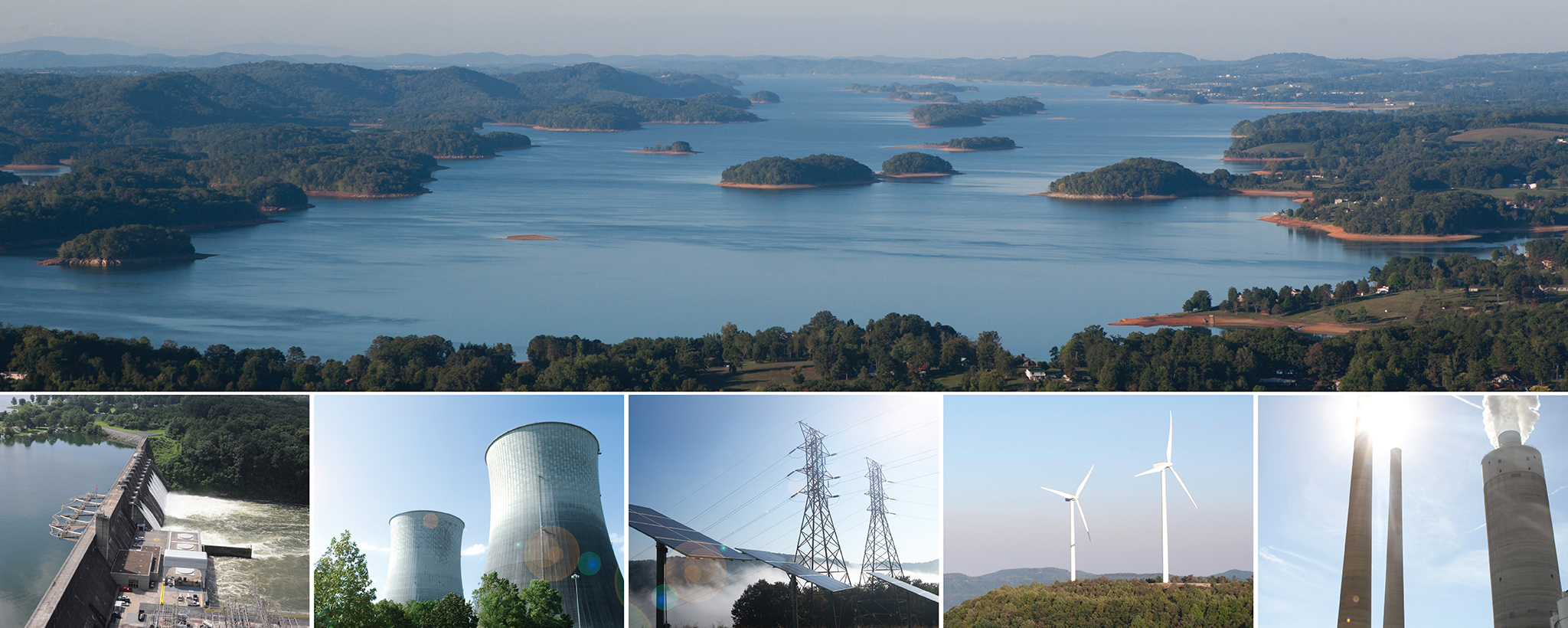
TVA’s Integrated Resource Plan (IRP), developed with input from our stakeholders, serves as a compass to guide the agency’s decisions for meeting forecasted energy demand in the coming decades.
Integrated Resource Plan
Environmental Reviews
In compliance with the National Environmental Policy Act (NEPA), TVA considers the impacts of its actions on human health before making decisions in order to protect, restore and enhance our region's human environment.
Environmental reviews
Land Management
From protecting cultural resources to ensuring environmental integrity, we measure the effects of our activities when making improvements to TVA public lands, whether for public recreation or economic development.
Land management
Sustainability
For TVA, sustainability means providing affordable and reliable electricity, healthy environment and prosperous economy for our region without compromising the ability of future generations to do the same.
Sustainability
Water Quality
TVA works with federal and state partners to maintain a clean and safe water supply by monitoring river systems, certifying clean marinas and supporting aquatic health in our region.
Water quality
Air Quality
TVA provides safe and reliable power for our region while working hard to improve air quality. Read about our aggressive emission controls, state-of-the-art technology and ongoing research.
Air qualityGet Support for Your Organization
Non-profits, institutes of education and local governments within the TVA Service Area can receive up to $5,000 to enhance or grow their environmental programming.
The community outreach andsupport program provides assistance to organizations for environmental education events and activities. Funds have been used for supplies, equipment, publicity and/or hospitality.
The reservoir and community cleanup program provides assistance to organizations for litter prevention programs, recycling and cleanups. Funds usually go toward expenses related to publicity, hospitality, cleanup supplies and disposal costs.
- Organizations must be recognized by the IRS as a nonprofit or public institution (e.g. public schools) and have a current Employee Identification Number registered with the IRS. This does not include support for federal, state and local governments.
- Complete and submit the appropriate Request Form, program description and budget; requests are accepted in October and March.
- Contributions received from TVA have to be spent in the federal fiscal year (October 1 to September 30) they are received.
- If approved, you will need to sign a letter of partnership that states you will spend the funds according to your submitted request.
- Operational expenses, such as salaries, rent and utilities are eligible but cannot exceed 50% of requested funds. Fees for speakers, photographers or others are considered as labor and are therefore part of salaries.
- Report your results within 8 days after each event or project using the provided Report Forms.
- It is important that you retain your receipts according to IRS guidelines for nonprofits.
- Limit request to $5,000 or less.
- Organizations can apply for funding from both funding programs in the same fiscal year but will only be awarded funding from one.
These are the general guidelines. If you have a specific question, please contact the PLIC.
Sustainability Report
Learn how TVA is protecting the environment while powering growth in the region in our FY 2023 Sustainability Report. Also check out our stewardship projects and progress reports.
Aquatic Plant ID
The plant-by-plant guide provides information to help you understand when aquatic plants are most productive, where they can grow and how to identify them.
Biodiversity
The Tennessee Valley region is one of the most biodiverse places in the world and is home to species which exist nowhere else. Learn how TVA is protecting biodiversity through stewardship, partnerships and habitat conservation.
Pitch In!
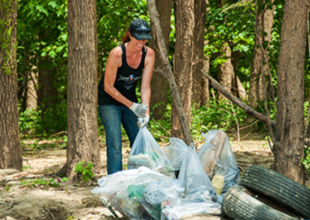
Enjoy our 293,000 acres of public land and 11,000 miles of shoreline? Join us in helping to maintain it.
EPA Mitigation Projects
TVA has agreed with the EPA to undertake these groundbreaking energy efficiency programs in line with its vision for a leaner, cleaner future.
Natural Resource Plan
Our Natural Resource Plan maps out TVA's long-term commitments to environmental stewardship.